









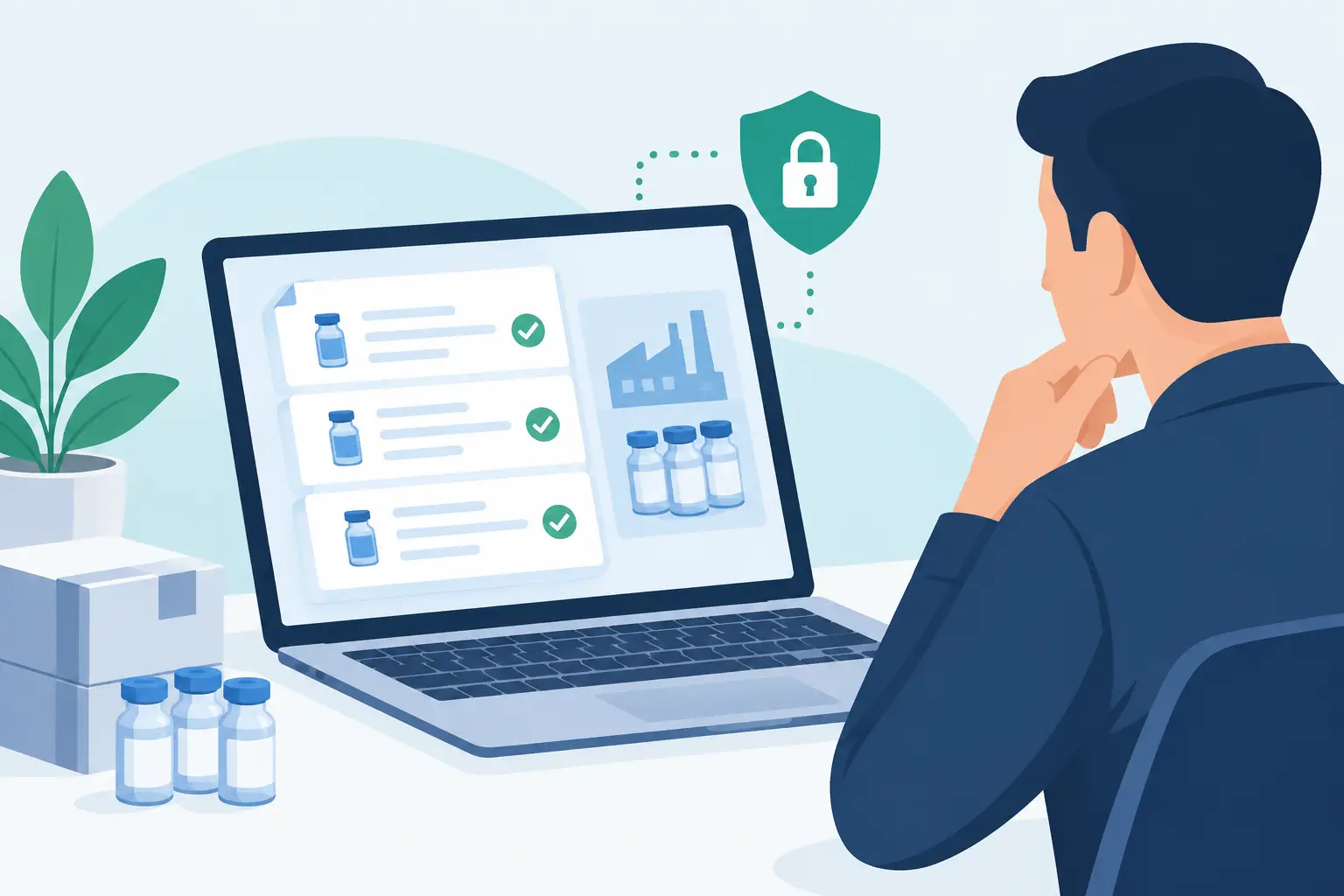
A product label can identify a peptide, but it cannot establish which specific manufacturing lot is in hand or what testing supports that lot. Can buyers access batch records before purchasing? In a properly organized research-material supply process, buyers should be able to access meaningful lot-level quality documentation, or receive clear instructions for verifying it, before relying on a product for research use.
The practical answer is not that every internal manufacturing document should be public. It is that a buyer should have access to enough batch-specific evidence to connect the product offered for sale with the quality claims being made. That distinction matters when purchasing professional-grade research peptides, where product identity alone is not a substitute for documented traceability.
Can Buyers Access Batch Records Before Purchase?
Yes, often through a certificate of analysis, batch verification portal, COA Registry, or a supplier-provided verification process. The level of access depends on the supplier's quality system, the type of record requested, and whether the item is assigned to a finalized lot at the time of sale.
For most research purchasers, the central document is the certificate of analysis, or COA. A batch-specific COA is intended to report the analytical results associated with an identified lot. It allows the buyer to assess whether the documentation corresponds to the material being purchased rather than to a generic product specification or an unrelated example report.
Pre-purchase access is especially useful when a research protocol depends on defined purity, identity confirmation, or lot continuity. It also helps purchasing teams set documentation expectations before an order is placed rather than trying to resolve gaps after delivery.
That said, the phrase "batch records" can describe more than a COA. Complete internal batch records may include manufacturing instructions, equipment logs, raw-material details, deviation documentation, personnel information, and other controlled records. Suppliers may not release those documents publicly for confidentiality, security, or operational reasons. A credible documentation process should state what is available to buyers and provide a reliable path to the records that support released lots.
What a Buyer Should Be Able to Verify
A useful batch-level record creates a direct connection between the product, its lot identifier, and its reported testing. At minimum, a buyer should be able to confirm the product name, batch or lot number, test date or document date, and the analytical results relevant to the claim being evaluated.
For research peptides, quality documentation commonly addresses identity and purity. The exact methods and reported values will vary by material and testing approach. A COA may reference chromatographic purity data, mass confirmation, appearance, net content, or other specification-based results. The presence of a test name is not enough by itself. The record should identify the result and indicate whether it meets the stated specification.
Traceability is the operational value behind these details. If the vial label, order record, packing information, and COA all point to the same batch number, the buyer has a documented chain from the purchased item to the associated quality record. If those identifiers do not align, the documentation may be informative but it is not batch verification.
A buyer should also look for document controls. These can include a report number, issue date, authorized review field, or a controlled registry entry. Such elements do not prove analytical performance on their own, but they help distinguish an active, lot-specific quality record from an undated marketing attachment.
Batch-Specific COAs Versus Product-Level Claims
Suppliers sometimes publish a single COA for a product page. That can be useful as an example of the testing format or as background on typical specifications. It should not automatically be treated as proof that every current unit was tested under the same batch number.
The question is straightforward: does the record identify the same lot that will be shipped? If the answer is yes, the buyer can evaluate a batch-specific document. If the answer is no, the buyer is reviewing a product-level claim or a representative report. Those are different levels of evidence and should be described differently.
There are legitimate timing considerations. Inventory can move quickly, and a supplier may assign final fulfillment lots only after an order is processed. In that case, the supplier should provide a defined post-purchase verification method that allows the buyer to check the exact lot received. The process should not require guessing which document applies.
For planned research purchases, it is reasonable to ask whether the current lot's COA is available before ordering, whether the lot shown online is the lot expected to ship, and what occurs if inventory changes. Clear answers to these questions reduce avoidable administrative work later.
How Secure Batch Verification Should Work
A strong verification system is designed for retrieval, not just display. Buyers should be able to locate a record using a batch number, product identifier, or other controlled reference. The system should return the corresponding documentation without forcing the buyer to rely on screenshots, informal email attachments, or broad catalog claims.
Secure batch verification also benefits the supplier. It creates a repeatable process for managing document access, correcting revisions, and maintaining consistency between storefront inventory and quality records. A controlled COA Command Center or registry can make the verification path visible to customers while preserving appropriate control over internal records.
The best experience is simple from the buyer's perspective: identify the lot, access the document, compare the identifiers, and retain the record with the research file. Simplicity should not mean lack of detail. It should mean that the detail is organized and searchable when needed.
Questions That Expose Documentation Gaps
Before purchasing, technically informed buyers can assess a supplier's documentation practice with a few direct questions. Is the COA tied to a specific lot? Can the lot number on the delivered unit be matched to that COA? Are current and prior records organized in a registry? Is there a process for requesting clarification when a report is revised or a lot changes?
The supplier's response matters as much as the document itself. Vague claims such as "third-party tested" do not explain which lot was tested, what analysis was performed, or how the buyer can confirm the result. A quality-focused supplier should be able to identify the verification route clearly and describe the scope of the available documentation without overstating it.
Buyers should also avoid assuming that a high reported purity value answers every quality question. Purity, identity, handling, storage, packaging integrity, and lot traceability are related but distinct controls. The appropriate review depends on the research application's requirements and the buyer's internal procedures.
Keeping Batch Documentation With the Research Record
Accessing documentation is only the first step. Once a research material is received, retain the COA or verification record alongside the order confirmation, lot number, receipt date, and any internal storage or handling notes. This creates a practical record of what was used and when.
For repeat purchases, compare the new lot with prior records rather than assuming all batches are interchangeable. A change in lot does not indicate a problem. It does mean the documentation should be reviewed as a new, independently identified material. This is particularly relevant when maintaining continuity across extended research work.
At Axis Direct Labs, the purpose of a COA Registry and secure batch verification process is to make this review operational rather than optional. Documentation should support a buyer's due diligence at the point of purchase and remain available when the material is received.
The useful standard is not unrestricted access to every internal file. It is clear, batch-specific evidence that buyers can locate, match, and retain. When a supplier treats that evidence as part of the purchasing process, researchers can make more controlled decisions before a product enters the lab.