









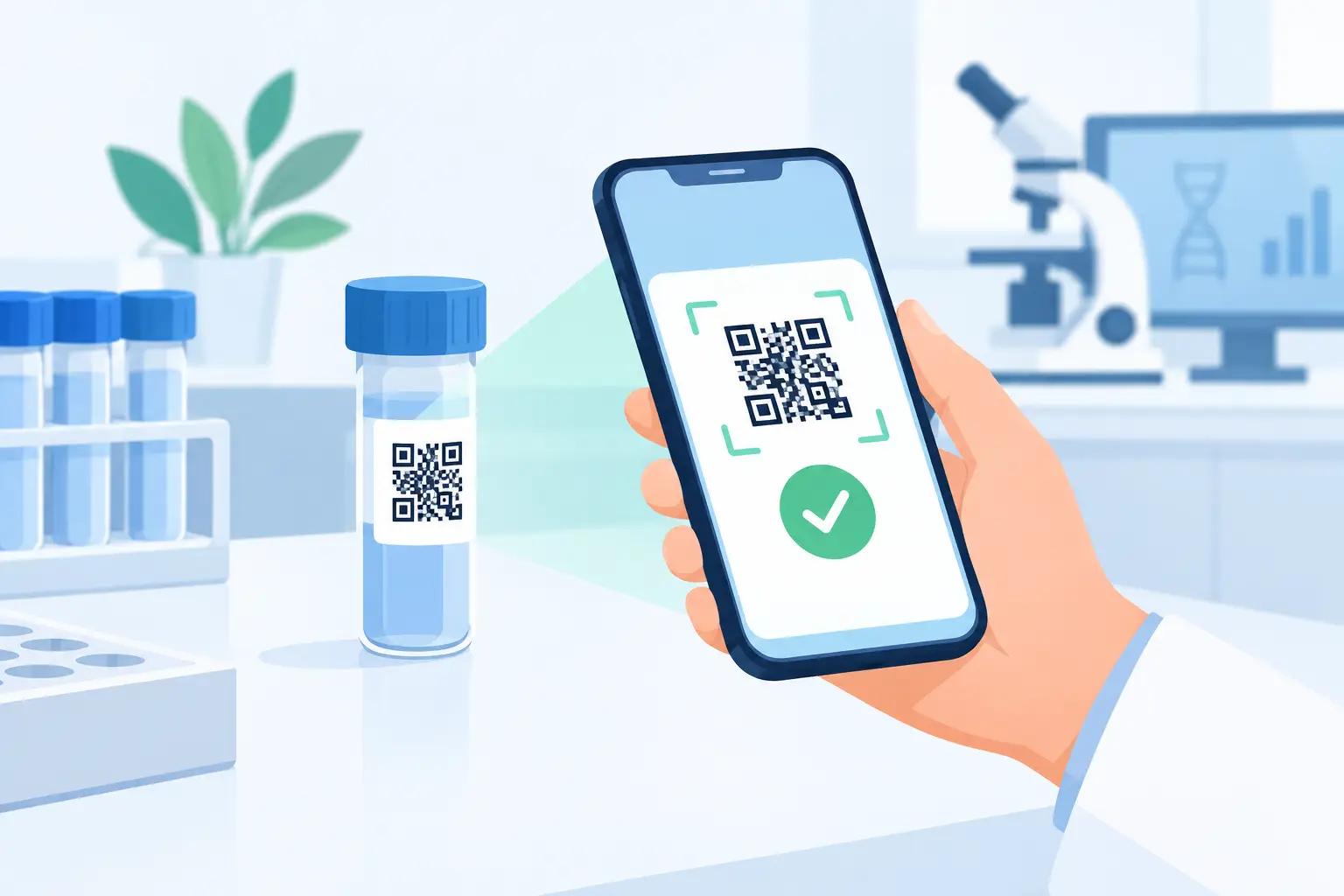
A QR code on a research-product label should do more than open a generic webpage. When you know how to use QR verification correctly, it becomes a practical control point for confirming that the package in hand corresponds to a documented batch record, certificate of analysis, and supplier-managed quality file.
For research purchasers, that distinction matters. A code can be copied, a landing page can be outdated, and a certificate without a matching batch identifier has limited value. Effective verification requires checking the relationship between the physical label, the digital record, and the documentation associated with that specific lot.
What QR Verification Is Designed to Confirm
QR verification is a fast-access method for retrieving product and batch information from a secure supplier system. The code generally directs the user to a verification page, registry entry, or controlled document center where batch-level records can be reviewed.
Used properly, the process helps establish traceability. You are not simply confirming that a supplier has published a COA somewhere online. You are confirming whether the product identifier and batch or lot number on your package match the identifiers presented in the digital record.
Depending on the supplier’s documentation system, a verified record may include the product name, batch number, testing date, analytical results, storage guidance, document status, and a downloadable or viewable certificate of analysis. The available fields vary by product category and testing program. What matters is that the record is specific enough to support an informed review.
QR verification is not a substitute for laboratory qualification procedures, incoming-material controls, or method-specific testing where those are required. It is a documentation and traceability tool. Its value comes from making the supplier’s quality record directly accessible at the point of receipt or before research use.
How to Use QR Verification Step by Step
Start with the physical package. Locate the QR code and review the printed information near it before scanning. A controlled label should typically present an identifiable product name and a batch, lot, or reference number. If the label is damaged, incomplete, or inconsistent with the order record, document the issue before relying on the code.
Use a phone camera or a dedicated QR scanner to scan the code. Most current mobile devices will display a notification containing the destination. Before opening it, examine the domain shown in the preview. The destination should correspond to the supplier’s official verification environment, not an unfamiliar domain, a shortened address, or an unrelated document host.
After opening the verification page, compare the displayed product name to the item received. Then compare the batch or lot identifier character by character. Do not rely only on a partial match. A one-character difference can represent a different production run, a different format, or an unrelated record.
Next, review the document status and the associated COA. A usable COA should identify the material and the batch being evaluated. It should also provide enough analytical context to interpret the listed result, such as the test method or analytical category, result values, acceptance criteria where applicable, and date of analysis or release. A certificate that names only a product family without a lot-specific identifier does not provide the same level of traceability.
Finally, retain the record in accordance with your purchasing or laboratory documentation process. For a small independent research workflow, that may mean saving the batch number, order reference, and verification date in a receiving log. For a formal laboratory environment, it may mean attaching the COA to the incoming-material record and documenting the reviewer’s disposition.
Verify the Record, Not Just the QR Code
A QR code is an access mechanism, not proof by itself. The verification decision should be based on what the code retrieves and whether the record aligns with the product in your possession.
A useful review has three matching points: the package label, the order or packing information, and the verification record. The product description should be consistent across all three. The batch number should match exactly. The quantity, presentation, or reference format should also make sense for the item received.
This approach prevents a common documentation error: treating a general product-page COA as evidence for a specific package. Product pages may contain example specifications, representative data, or information related to a different batch. A secure batch-verification record should identify the lot tied to the received material.
Where a COA includes analytical terminology, review it in context. Purity results, mass confirmation, chromatographic data, and other testing outputs can be useful indicators, but their relevance depends on the material, the stated method, and the supplier’s documented release process. A high percentage displayed without a clear batch identity or testing context is less informative than a complete, traceable record.
What to Check in a Batch-Level COA
When the QR verification page provides access to a COA, focus first on record integrity. The product designation, lot number, and document date should be visible and internally consistent. The certificate should identify the testing laboratory or responsible quality function and should not appear to be an uneditable image with missing source details.
Review the analytical sections next. For professional-grade research materials, documentation may include identity confirmation, purity or assay results, appearance, storage conditions, and other lot-release information. The specific test panel depends on the material and supplier. Not every product requires the same analytical profile, so a longer certificate is not automatically a better certificate.
Look for clarity rather than volume. A reliable record states what was tested, which batch was tested, and what result was obtained. If the document includes acceptance specifications, confirm that the listed result is presented in relation to them. If terminology is unclear, use the supplier’s documented support channel rather than making assumptions about a result.
Also check whether the document is current for the batch you received. A legitimate historical COA can still be valid for its lot, but it should not be presented as if it applies to a newer batch with a different identifier. Batch-level traceability is the control that keeps those distinctions visible.
When a QR Verification Result Requires Follow-Up
Not every scan will produce a clean result. Camera permissions, poor lighting, damaged printing, browser settings, or a temporary system issue can prevent the page from loading. In those cases, do not treat a failed scan alone as evidence that a product is invalid. First, try scanning under better lighting, manually entering the printed batch number where a verification portal allows it, or using another current device.
A mismatch between the package and the online record is more significant. Place the material aside from active inventory until the discrepancy is clarified. Preserve the packaging, take clear images of the label and displayed record, and retain the order reference. This creates a practical evidence trail for support review.
Follow up when the code leads to an unrelated page, the batch record cannot be found, the product name differs, or the COA lacks the lot identifier shown on the package. The same applies when a document appears altered, expired, or inconsistent with the supplier’s established format. A transparent supplier should be able to explain the record path and provide appropriate quality documentation.
Axis Direct Labs organizes verification resources around secure batch verification and accessible COA records so research purchasers can review documentation without treating it as an afterthought. The appropriate next action remains the same regardless of supplier: verify the physical label against the controlled record before adding the material to a research workflow.
Establish a Repeatable Receiving Control
For recurring purchases, QR verification is most effective when it is built into receiving rather than performed only when a question arises. Scan and verify the product when the package is first opened or entered into inventory. Record the batch number, verification date, and location of the retained documentation at that time.
This is particularly useful when multiple people handle research materials. A documented receiving check reduces the chance that a package and its supporting record become separated later. It also makes it easier to identify which batch was used in a specific project if documentation must be reviewed after the fact.
Keep the process proportionate to your setting. Independent researchers may need a concise log and archived COA. Laboratories operating under formal quality systems may require defined roles, controlled storage locations, deviation handling, and additional incoming-material checks. QR verification supports either model, but it does not replace the controls appropriate to the research environment.
The strongest verification habit is simple: scan the code, confirm the exact batch, read the supporting record, and preserve that connection. When documentation remains attached to the material from receipt through research use, quality information stays actionable rather than becoming a claim that cannot be checked.